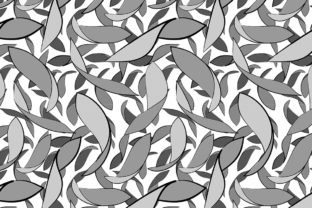
Floral Abstract Vector Pattern Design: Scalable Creativity for Real Projects
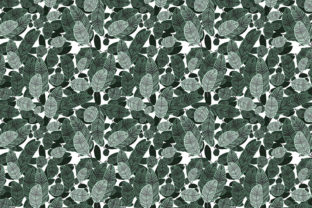
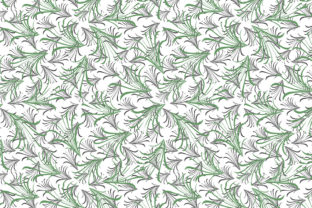
Designers, marketers, educators, and small business owners increasingly face a shared challenge: balancing visual impact with practical efficiency. A Floral Abstract Vector Pattern Design meets that need precisely—not as a decorative afterthought, but as a functional, adaptable asset built for modern creative workflows. Unlike raster-based motifs that blur when enlarged or lose fidelity across formats, this vector object is fully scalable, color-filled using the bucket mesh tool for nuanced gradients and organic transitions, and hand-drawn to retain expressive character without sacrificing technical precision.
Why This Kind of Design Fits Today’s Creative Reality
Over the past five years, demand for versatile, production-ready design assets has grown—not because trends shifted overnight, but because working conditions did. Remote collaboration, faster turnaround expectations, and multi-channel publishing (web, print, social, merchandise, presentations) mean creators can’t afford to rebuild the same motif in six different sizes or color schemes. A Floral Abstract Vector Pattern Design bridges that gap: it arrives ready to use, yet remains infinitely editable. You’re not locked into one look—you’re given flexibility by design.
This aligns with how professionals actually work now. A freelance graphic designer might drop the pattern into a brand guideline PDF, scale it for a Shopify banner, then rotate and recolor it for an Instagram story—all within the same session. An educator creating printable worksheets adjusts the opacity and layers it behind text without worrying about pixelation. A boutique owner uses the EPS file to embroider a subtle floral motif on packaging labels, then exports the JPEG for their email newsletter header. The workflow isn’t theoretical—it’s documented in real usage patterns across Adobe Illustrator, Affinity Designer, CorelDRAW, and even browser-based editors like Vectr.
From Hand-Drawn Origin to Digital Utility
The “hand drawn” aspect matters more than it might first appear. In an era saturated with AI-generated symmetry and algorithmic repetition, tactile imperfection carries quiet authority. It signals intention—not just decoration. That slight irregularity in petal curvature or stem taper communicates human craft, which resonates especially in wellness branding, artisanal product lines, educational materials, and storytelling-driven content. Yet because it’s vector-based and built with the bucket mesh tool, those organic qualities remain crisp at any size—from a 16-pixel favicon to a 48-inch trade show backdrop.
This evolution reflects a broader shift: digital tools no longer force a choice between authenticity and scalability. Earlier vector illustrations often prioritized clean geometry over texture; hand-drawn sketches were typically scanned and treated as bitmaps, limiting reuse. Today’s hybrid approach—hand-drawn origin, vector execution, mesh-filled depth—offers both warmth and utility. It’s why designers increasingly seek assets like this Floral Abstract Vector Pattern Design: they don’t ask you to compromise on either front.
What’s Included—and Why Each File Type Matters
The package includes three essential components: an EPS file, a JPEG file, and a help file with license details. Each serves a distinct, practical purpose:
- EPS file: The editable, vector-native format. Ideal for designers who need to adjust paths, reassign colors, isolate elements, or integrate cleanly into larger layouts. It retains full scalability and works reliably across professional design software—even older versions of Illustrator.
- JPEG file: A high-resolution preview and fallback option. Useful for quick mockups, client presentations where editing isn’t needed, or platforms that don’t accept vector uploads (like some CMS editors or social media schedulers).
- Help file + license: Clear, plain-language guidance—not legalese. Confirms permitted uses (commercial and personal), outlines restrictions (no reselling the file as-is), and affirms attribution is optional. For freelancers quoting projects or small teams managing brand assets, clarity here prevents downstream confusion.
No hidden dependencies, no subscription required, no cloud sync needed. Just open, use, adapt—immediately.
How to Use It Without Overcomplicating Things
Using this Floral Abstract Vector Pattern Design doesn’t require mastering advanced vector techniques. Most users begin with one of two actions:
- Double-click the EPS file—it opens directly in compatible vector programs (Illustrator, Affinity Designer, Inkscape). From there, select and scale freely. Rotate with the rotation tool. Modify colors via the fill panel or recolor artwork options.
- Drag-and-drop into your current project. Many designers skip opening the file separately and instead place it as a linked or embedded asset—preserving editability while keeping their working file organized.
You’re not expected to trace, redraw, or manually recreate anything. The mesh-filled coloring means shadows, highlights, and tonal variation are already built in—not layered as separate objects. That saves time during revisions, especially when clients request quick palette swaps or layout adjustments.
Real Applications Across Roles
Consider how this asset functions outside the design studio:
- A blog owner uses the pattern as a subtle background for quote graphics—scaling it down to 30% opacity so text remains highly readable.
- An educator imports the vector into Canva, ungroups elements, and repurposes individual blossoms as custom bullet points in lesson slides.
- A product photographer places the pattern beneath a flat-lay shot of ceramics or stationery, then adjusts blending modes in Photoshop to create cohesive, branded visuals—without hiring an illustrator.
- A nonprofit communications manager adapts the color scheme to match their accessibility guidelines (e.g., higher contrast yellows and deep teals), then applies it to annual report dividers and donor thank-you cards.
None of these require illustration skills. They rely instead on thoughtful asset design—where intention, usability, and inclusivity are baked in from the start.
Looking Ahead—Without Overpromising
Will vector pattern design replace custom illustration? No. Will it eliminate the need for skilled designers? Absolutely not. What it does offer is intelligent leverage—giving people more time to focus on strategy, messaging, user experience, and meaningful iteration. As tools evolve, the value isn’t in complexity, but in reducing friction where it’s unnecessary.
That’s why attention is turning toward well-crafted, responsibly licensed vector assets like this Floral Abstract Vector Pattern Design. Not because they’re “trendy,” but because they reflect a maturing understanding of what support really looks like in creative work: clarity over clutter, flexibility over rigidity, and respect for the user’s time and expertise.
If you’ve ever spent 20 minutes adjusting anchor points on a downloaded SVG only to find it breaks at larger sizes—or hesitated before using a free resource because the license terms were vague—then this kind of asset represents something quietly significant: reliability, designed intentionally, and delivered without fanfare.