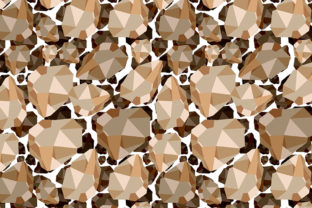
Classical Stone Repeat Pattern
A Classical Stone Repeat Pattern is a digitally crafted, tileable design that mimics the natural texture, variation, and rhythm of traditional stone masonry—think limestone walls, weathered flagstone patios, or aged cobblestone streets. Unlike a single photo of stone, this pattern repeats seamlessly across any surface, making it ideal for backgrounds, wall coverings, packaging, web design, print layouts, and 3D material mapping. What sets it apart is its balance: authentic enough to feel grounded and timeless, yet refined enough to scale cleanly without visible seams or artificial repetition.
Why This Pattern Matters—Depending on Who You Are
For a freelance graphic designer, it’s about speed and professionalism—dropping a high-resolution, seamless stone texture into a client’s branding mockup without spending hours masking or tiling manually. For a small business owner launching handmade ceramic tiles, it’s a realistic, low-cost way to visualize how their product might look installed—in brochures, social posts, or showroom displays—before committing to physical samples.
An interior design educator uses it to teach students about material hierarchy, scale perception, and how texture influences spatial mood—all without needing a photo studio or physical swatches. Meanwhile, a hobbyist building a miniature diorama values how the pattern’s subtle grain and soft contrast hold up under close inspection—and how easily it prints on cardstock or transfers to foam board.
What’s Included—and Why Each File Type Has Real Purpose
This Classical Stone Repeat Pattern comes with three essential assets:
- EPS file: A vector-based format perfect for scaling infinitely—ideal for signage, large-format printing (like trade show backdrops), or integrating into Adobe Illustrator workflows where crisp lines and editable paths matter.
- JPEG file: A high-resolution raster version (typically 300+ DPI, at least 4000px wide) optimized for web use, presentations, and digital mockups. It loads quickly, previews reliably, and works in virtually every design app—even free ones like Canva or Photopea.
- Help file: A plain-text or PDF guide explaining how to install the pattern in Photoshop (as a custom pattern preset), apply it as a fill in Illustrator, or tile it responsively in CSS. No jargon—just clear, step-by-step instructions for common tasks.
The included license clarifies usage rights upfront: it permits commercial use (e.g., in client work, product packaging, or online courses), but prohibits reselling the pattern file itself or claiming it as your original design. That balance gives creators freedom while respecting the craft behind the asset.
How Priorities Shift Across Experience Levels
Beginners often prioritize clarity over control. They need the JPEG first—it’s drag-and-drop friendly, doesn’t require special software, and looks great in blog headers or Instagram story templates. The help file becomes their quiet ally: “How do I make this fill my whole Canva background?” or “Why does my Photoshop pattern look blurry?” are real questions—not signs of inexperience, but smart starting points.
Experienced designers and developers lean into flexibility. They’ll open the EPS to extract individual stone elements for custom illustrations—or convert the JPEG into a procedural texture for Unity or Blender. They care less about “is it pretty?” and more about “can I bend it without breaking it?” That’s where the seamless repeat logic and consistent lighting direction in the pattern become quietly critical.
Educators and curriculum designers value consistency and accessibility. A single, well-documented Classical Stone Repeat Pattern can serve multiple lessons: color theory (analyzing warm/cool stone tones), composition (how repetition creates rhythm), or even digital ethics (discussing licensing, attribution, and creative reuse). Its neutrality makes it a teaching tool—not just decoration.
Real Projects, Real Decisions
Consider a local bakery rebranding. Their website hero image needs warmth and authenticity—no sterile stock photos. Using the JPEG version, they overlay hand-lettered type and adjust brightness in free tools like Pixlr. The result feels artisanal, not generic. Cost? Zero beyond time. Risk? Minimal—they can test three variations in an afternoon.
Now picture a freelance UX writer designing a finance app dashboard. They’re not using stone for aesthetics alone—they’re applying it subtly behind data cards to add tactile depth and reduce visual fatigue. Here, the EPS matters: it scales crisply on retina displays and exports cleanly to Figma as an SVG-based fill. Speed and fidelity aren’t luxuries—they’re part of the user experience.
Or imagine a high school art teacher planning a digital collage unit. She downloads the pattern, projects it on screen, and asks students: “Where do you see repetition? Where does variation break the rhythm—and why does that feel intentional?” The help file gives her a 90-second setup; the license gives her confidence to share the file with student accounts.
Does This Fit Your Next Step?
Ask yourself:
- Do you need realism without photography? If sourcing, editing, or licensing real stone images feels slow or costly, this pattern offers a trustworthy alternative—especially when consistency across formats (web + print + video) is key.
- Is seamless tiling non-negotiable? If your project spans banners, apparel, or app interfaces, a poorly tiled texture will distract or undermine credibility. This pattern was built to vanish—so the focus stays on your message, product, or story.
- Do you value clarity over complexity? There’s no subscription, no login wall, no “premium tier” for basic functionality. What you get is documented, usable, and ethically licensed—so you spend energy on creation, not compliance.
It won’t replace a custom photoshoot for a luxury architecture portfolio—but it might be the quiet foundation that gets a student’s portfolio site live, helps a maker prototype packaging overnight, or lets an educator illustrate design principles without budget constraints. That’s the quiet strength of a well-made Classical Stone Repeat Pattern: it serves the work, not the trend.